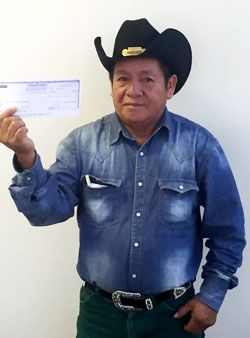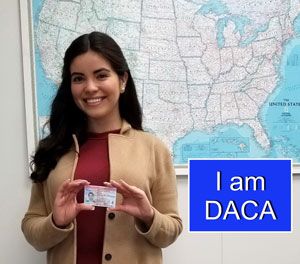
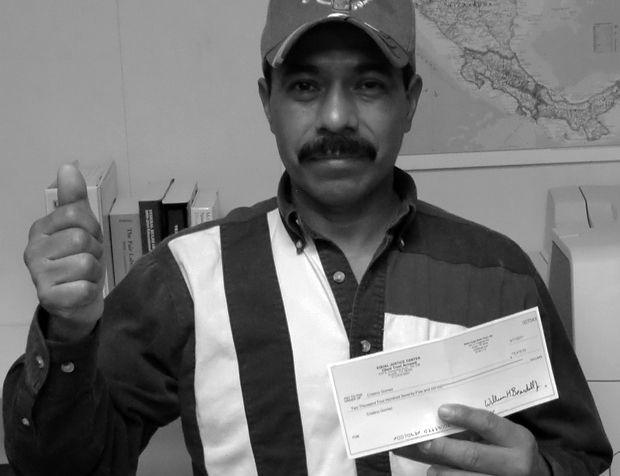
Underpaid for years, they finally recover the full back wages they earned — earnings vital to sustaining themselves and their families.
Make a Donation.
click here to donateNeed help with unpaid wages or overtime pay owed to you?
click here for more informationWorkers who cut, bagged, and stocked fruit in HEB grocery stores filed a class action lawsuit today in the federal court in San Antonio claiming HEB and an affiliated produce company cheated them out of minimum wage and overtime pay. The suit covers more than 80 workers who labored in HEB stores across South, Central, and North Texas, in places like San Antonio, Dallas, Houston, Austin, Fort Worth, Corpus Christi, Laredo, McAllen, Brownsville and numerous other cities.
According to the lawsuit, the workers – mostly immigrants and women – worked long hours cutting and bagging fresh fruit for HEB and placing it in the HEB produce display cases for purchase by HEB customers. Frequently the fruit cutters worked at open display counters in the middle of the produce section enhancing HEB’s image by highlighting the freshness of its products. However, the fruit cutters were not paid a regular hourly wage. Instead, they received a small piece rate, typically a set rate for each bag of produce actually purchased by a customer. The workers say they often earned as little as little as $4 per hour because this system set their piece rate so low and failed to guarantee payment of the legally-required minimum wage. In addition the fruit cutters received no overtime pay even though they regularly worked 50-70 or more hours a week.
HEB says it has no responsibility for the illegal wages paid to the fruit cutters, because the workers were set up as employees of an affiliated company, Pastrana’s Produce, a Brownsville-based corporation. However, the workers maintain that they were jointly employed by both HEB and Pastrana’s, pointing out that they were an integral part of HEB’s operations, laboring exclusively in HEB-owned grocery stores, for HEB’s direct benefit, with HEB produce managers supervising their work—including how to cut the fruit, and with HEB managers controlling their work hours. To make matters worse, the workers say, rather than correct the violations, HEB and Pastrana’s terminated them, tried to mislead them into waiving their legal claims, and tried to prevent them from enforcing their wage rights or even talking about the violation of their wage rights.
“It has become all too common nowadays for an employer to try to shift the blame for the under-payment of its own employees onto a pseudo-subcontractor,” said Equal Justice Center attorney Christopher Willett, “but rarely does a company as prominent as HEB do it quite this blatantly and ineptly.” The plaintiffs are represented by the non-profit Equal Justice Center and Houston law firm, Bruckner Burch.
The suit is the latest of several pending and settled lawsuits against HEB and Pastrana’s over the illegally low wages paid to similar fruit cutters in Texas HEB stores.
Said Felicitas Llanes, one of the plaintiffs in this latest suit, “We would watch at the end of the day as the HEB produce managers would throw out the unsold fruit that we had cut—which for us was the same as watching HEB throw away part of our already-low wages.”
Bill Beardall, Executive Director of the Equal Justice Center, commented, “It is really quite disappointing that a company like HEB, which has worked hard to cultivate a positive reputation as a good corporate citizen, would engage in wage practices like this in the first place, but then also fail to accept responsibility once the violations have come to light. HEB should step up and do the right thing for the employees who worked in their business.”
April 2013
The stories on our website and in our newsletters highlight just a small fraction of the working men and women we have been honored to assist – from one man or woman with a small individual wage claim to large groups of workers with sizable aggregate claims. There are countless more low-wage working people like them, both in the EJC’s work and across the nation.
The Equal Justice Center is proud to have given more than a thousand such workers the power to use the legal system to enforce their own wage rights. And we are pleased that we have so far enabled these low-wage working people to recover $4 million in unpaid earnings. But along the way, we have been building something even more important: We are gradually reshaping our legal and economic institutions in a way that expands the capacity of low- and moderate-wage working people to enforce basic fairness. And, as they know better than anyone, that basic fairness is the thing that can anchor their place in the self-supporting middle class and can prevent them from falling into poverty.
In November, 2011 the New York Times reported the startling new revelation by the Census Bureau that one in three people in America is currently living either below or near the poverty line. Half of them are what the Times labeled the “near poor” – individuals and families at less than 150% of the poverty level who are struggling from paycheck to paycheck to escape poverty.
This is the community that the Equal Justice Center works every day to serve and empower – working men and women striving to support their families through their own honest labor, but often living just one paycheck away from poverty. When they don’t get paid what they’ve earned, the EJC is there giving them the actual power to require the employer to hand over that paycheck they’ve worked for. Moreover, we are increasingly institutionalizing the power of low-wage workers within the justice system, in the expectations of employers, and in changed employment practices. And as we do this, we and our clients are building both a critical buffer against poverty and a vital support for the economic security, dignity, and self-sufficiency of all working families.
Thanks to all of you who are helping support this extraordinary endeavor.
- Bill Beardall, EJC Executive Director